|
In my last blog I looked at the qualities of a good piaffe shown by Jessica von Bredow-Werndl in the warmup area. (Click here to read it) This month I am looking at some of the problems that can occur in piaffe. This one is shown by Charlotte Fry whilst competing at the ECCO FEI World Championships 2022 https://www.youtube.com/watch?v=ohr_Vex4m4c&t=26s and the piaffe starts at 1 minute 7 seconds. In a correct piaffe the horse needs to engage its haunches, lighten it’s forehand and elevate the head and neck position. If the horse is prevented from doing this either by a lack of strength and balance or by the rider blocking the movement, the trot diagonal steps elevation and and straightness are lost. In this clip, as the rider approaches the piaffe from a passage, she makes a backward movement of her hands to bring the horse to piaffe. This action causes the horse to brace its neck and jaw and lose its forward momentum. To correct this the rider uses her spurs. The horse is now blocked between the rider’s hands and her legs and is unable to engage its haunches for the piaffe and the diagonal rhythm of the trot steps is lost (1 minute 7 seconds). (Picture 1.07 A)  Due to the disengagement of the haunches, the momentum of the piaffe has gone and the rider is now using a lot of leg and spur to create some steps. Her hand position does not change and forces the horse to drop its head behind the vertical and place its weight into its forehand. (1 minute 7 seconds). (Picture.1.07 B)  As the piaffe continues, the horse remains blocked by the rider’s hands and, unable to correctly engage his haunches, there is a continued deterioration of the diagonal trot steps. This results in the horse’s forehand swinging from side to side (1 minute 8 seconds). Picture 1.08 A This picture also shows the left diagonal breakdown with the hind foot moving off the ground before the forefoot and the fore legs stepping out to the sides rather than stepping cleanly up and down.  The next sequence of pictures (1.09, 1.10 A and 1.10 B) shows the continued breakdown of the steps as the horse makes sidesteps in the forelimbs and rocks its shoulders from side to side    In picture 1.12, the horse is blocked and diagonal rhythm of the trot steps is completely lost as the horse has all four feet on the ground at the same time.  © Training Riders, Transforming Horses
In a previous blog I looked at the causes of a horse rearing whilst in the middle of a dressage test, What Went Wrong? In this month’s blog, I wanted to look closely at a piaffe shown in a grand prix freestyle competition and the qualities that the horse shows in the movement in this video https://www.youtube.com/watch? =QElJ6Og6bp8 I am focusing on the piaffe that begins at 1 minute 8 seconds. Before this piaffe, the horse is in passage and to bring the horse into piaffe, the rider makes a backward pull on the rein (1:09) whilst simultaneously using her spurs and bracing her body backwards. This has the effect of compressing the horse through its neck which puts the horse on its fore hand, disengages its haunches and disrupts the diagonal steps (below). 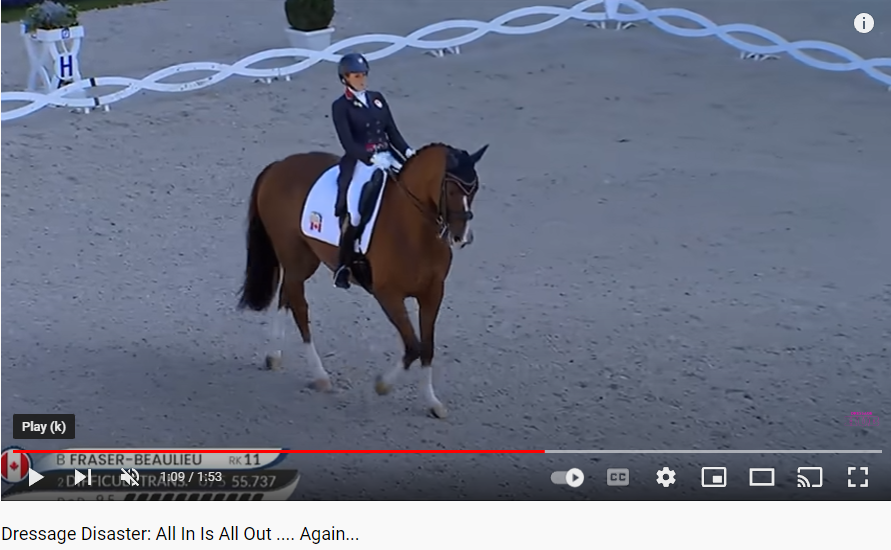 Consequently, the horse can only bounce its haunches up in the piaffe as it’s front legs barely come off the ground (1:13) and there is no elevation of the neck and withers. Unable to correctly engage its haunches the horse is now fully on its fore hand as the front feet land significantly before the hind feet and the rhythm of the diagonal steps is completely lost. 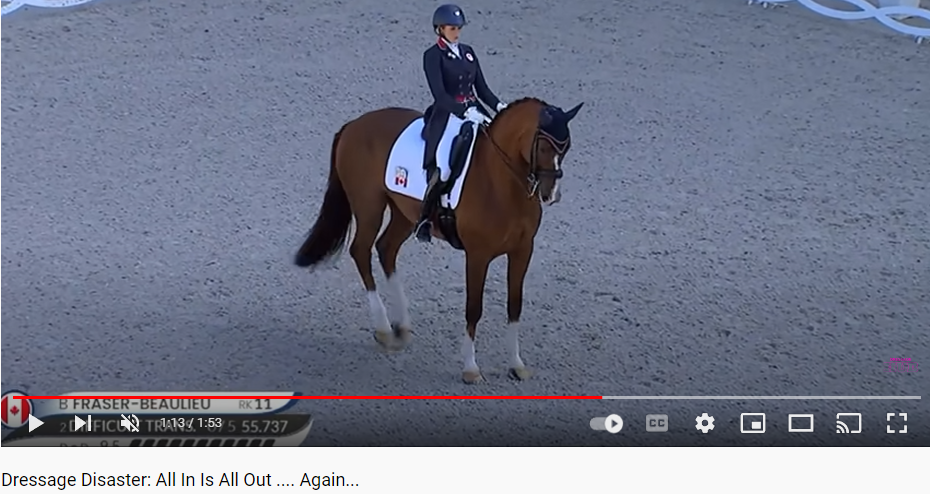 Through the piaffe, the horse swings its left hind out to the side whereas it should move up and down under the body of the horse. The rider makes continual backward movements on the reins, blocking the horse and creating resistance in the horse’s jaw, neck and back. Due to the incorrect movement in the piaffe, in the transition out of the piaffe, the horse makes two canter strides before picking up passage steps(1:22). 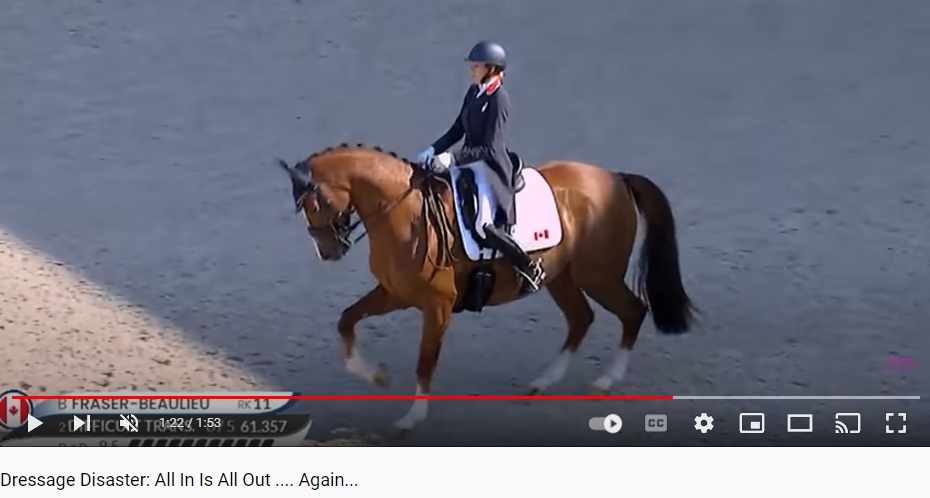 In a correct piaffe, the horse moves its centre of gravity back, the hind legs flex more and the fore hand becomes lighter and more elevated. The haunches should not bounce higher than the withers. The front feet should be raised higher than the hind feet, or the hind feet and front feet should come to the same height if the horse’s conformation or level of training does not allow for the former. If the hind feet are raised higher than the front feet, it is a clear indication that the piaffe is on the fore hand and incorrect. The pictures below show two horses with different conformation showing correct piaffe steps and the piaffe shown by this horse and rider for comparison. © Training Riders, Transforming Horses
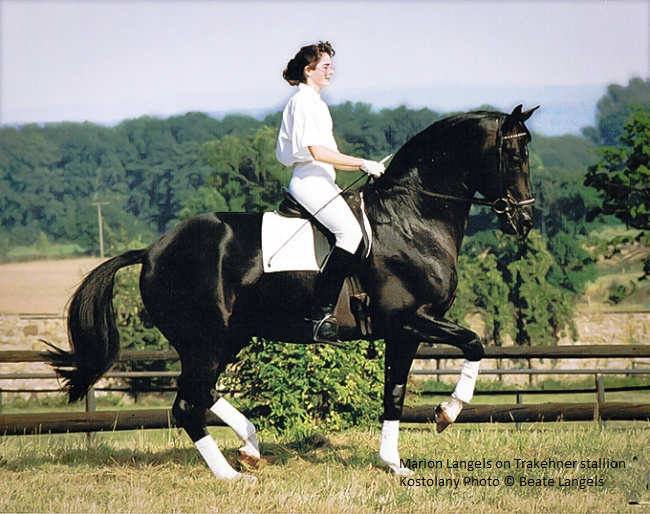
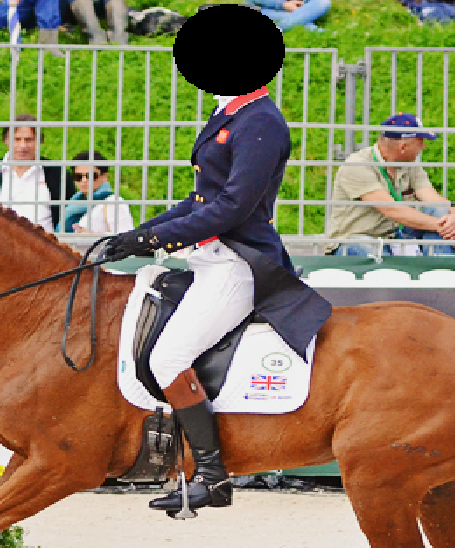
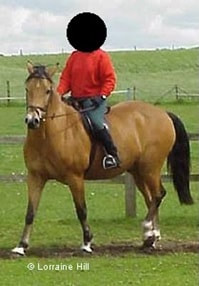
In dressage, your position is critical to being able to move with your horse, which in turn is important for feeling the communication that your horse gives you and this allows you to give precise, well-timed aids without interfering with your horse. A good position creates a balanced rider, necessary for riding in harmony. An important aspect of the rider’s seat is balance. As soon as the rider’s balance is lost, the horse also becomes unbalanced and heavy in the forehand, leaning on the rider’s hand. A good position allows the rider to maintain balance in movement with the horse, whereas an unbalanced rider impedes the horse’s natural movement. There is a lot of information about the correct position, and whilst the basic principles of posture for the dressage seat remain the same, it is important to apply them in relation to each rider. The position of a tall rider will not necessarily look the same as the position of a shorter rider, especially on different shaped horses. A common phrase used for dressage riders’ position is a deep seat, which refers to the ability of the rider to move their pelvis and lower back in complete harmony with the horse’s back movement. This seat is developed by having your leg stretched out from the hip, around the horse’s rib cage without gripping, and your upper body balanced over their seat bones, without wobbling from side to side or backwards and forwards. In this position, your spine can move precisely with the movement of the horse’s spine. Once the rider loses balance, they often resort to gripping with the legs or pulling on the reins to regain their balance, or just to stay with their horse! When this happens, the horse is instantly blocked, and the rider’s aids are indistinguishable from the gripping or pulling. As the horse tries to compensate for the rider’s lack of balance, they too become unbalanced. The strength of the rider’s position or seat comes from being able to maintain balance. Toned core muscles are needed for this, muscles that can react quickly by an appropriate amount and then instantly release. Full on muscles are not always needed, sometimes the slightest movement is sufficient to rebalance the horse. When the rider finds that state of perfect balance, the horse begins to move more freely and then they can start to develop their suppleness. The rider can feel the responses the horse gives and adapt the exercises accordingly. ©Training Riders, Transforming Horses
Have you ever wondered why it’s worth perfecting a circle? It may feel as though a circle is a basic movement, useful for young horses and in a warmup, but after that the benefits of a simple movement can often be forgotten as we move onto more interesting things. Circles provide a foundation for all the other work and they are extremely useful throughout a training session. For a novice horse or rider, a circle teaches the basics of balance and engagement. For a more advanced horse, a circle rebalances and reengages them, that is, if they are ridden correctly. A correct circle is very hard to ride for both horse and rider. Many horses fall in or out of the shape without the rider even being aware of it. The major benefits of the exercise are wasted, and poorly executed circles can leave your horse more out of balance before. To quote Nuno Oliveira, “a circle is a correct geometric shape, not a potato or an egg.” Whilst different trainers use different aids for a circle, the qualities that come from the movement should be:
To ride a circle, the rider’s hips should match the position of the horse’s hips, and the rider’s shoulder should match the position of the horse’s shoulders. This means that they rider needs to rotate at their waist, advancing their outside shoulder without allowing their inside seat bone to follow the movement, which would bring their hips out of position. Simply trying to make a circle by use of the inside rein only achieves a twisted and resistant position in the horse’s head and neck. The difference can be felt by the rider and can be clearly seen in the pictures below. ©Training Riders, Transforming Horses
The bit is a subtle way of communicating with your horse, a whispered conversation between horse and rider. No-one else can see the conversation happening, but they can see the results. The bit gives the rider instant feedback on how the horse is feeling in that moment. A soft, relaxed mouthing of the bit shows a unity between the horse and rider. If this continues through the work, the horse is comfortable and both horse and rider are content with the relationship. This fragile contact is lost if the rein contact is more than the weight of the reins in the rider’s hands. Having X pounds of pressure blocks the horse and hardens the delicate structures of the mouth. Long loose reins does not create any communication between horse and rider. If a problem with the work occurs, the first place this will be shown is in the horse’s mouth, communicated to the rider via the bit. The skilled rider will recognise this and make the necessary adjustments to the work. If this feedback is not recognised and acknowledged by the rider taking the steps needed to change what they are doing, the horse will start to raise their voice by blocking elsewhere in their body and avoiding the exercise. When this unwanted behaviour is displayed, riders often look for an external solution, a stronger bit, a tighter noseband, a martingale. This simply ignores the issue and unless trainers and riders are willing to uncover the root cause of the problem, the fix masks the difficulty until it emerges somewhere else. To achieve this level of control and subtly requires riders to have a good position and balance, a lifetime’s work. 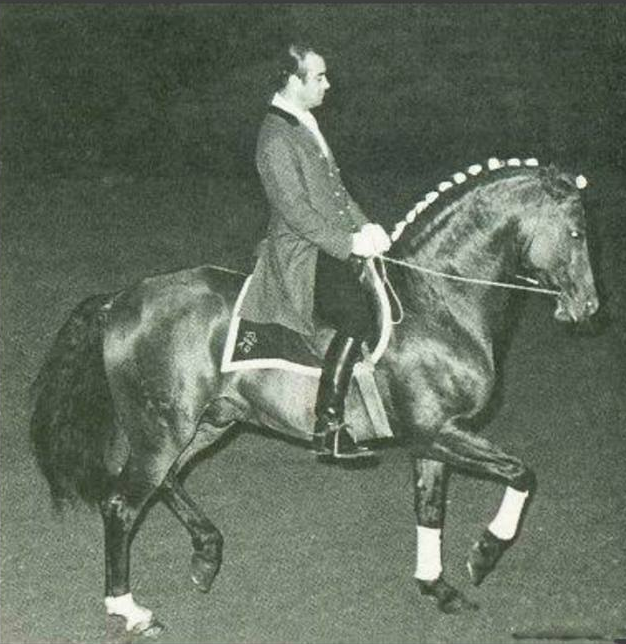  © Diane Followell - Training Riders, Transforming Horses
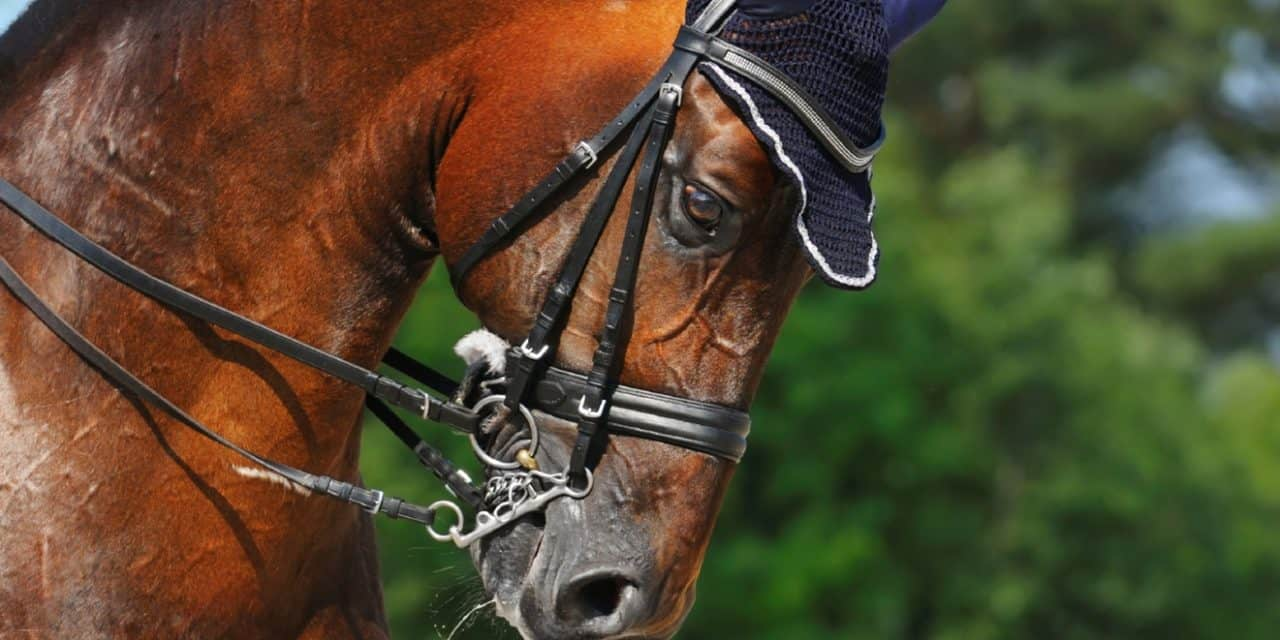
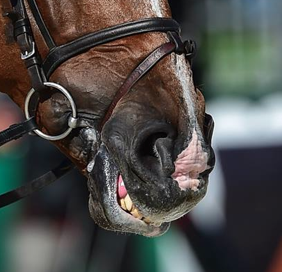 Whilst a lot of time is spent thinking about which bit to use, nose bands tend to be used solely to keep a horse’s mouth shut. Mostly riders use a flash or a cavesson, done up tightly to prevent the horse from opening its mouth. Apart from the obvious physical pain and harm that this inflicts on a horse, it masks a very important communication channel between a horse and their rider. The art of dressage riding is to finesse the communication between the horse and rider so that, to an observer, the rider appears to be doing nothing. Part of achieving this is having the horse soft and mobile throughout their work, and the horse’s mouth is a very good reflection the level of that relationship between horse and rider. For example, if a horse is finding an exercise difficult or feels too much pressure from the rider’s hands, this will show first through the horse’s mouth with blocks such as fixing the jaw, opening the mouth or putting their tongue over the bit. 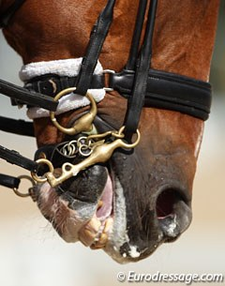 Tightening the nose band to prevent this behaviour does not solve the problem. Unable to express himself via his mouth, horses often become harder in the jaw and the tension occurs elsewhere in his body. As the stress ripples throughout the horse’s body, blocks can often be seen in the horses neck, back and hind legs. The solution is to change what you are doing, rather than increasingly tightening the nose band. It may be as simple as modifying an exercise slightly, or you may need to look a bit deeper at how you are asking. Riding with a softer hand and working more tactfully from your seat and back or with your leg. The connection between bit and rider’s hands should always be the weight of the reins. For very skilled riders, the slightest tension in the horse’s mouth is felt in their hands, and they make appropriate adjustments to make the horse comfortable. With a nose band that is done up tightly, the horse is unable to speak to the rider and training becomes an exercise in force. ©Training Riders, Transforming Horses
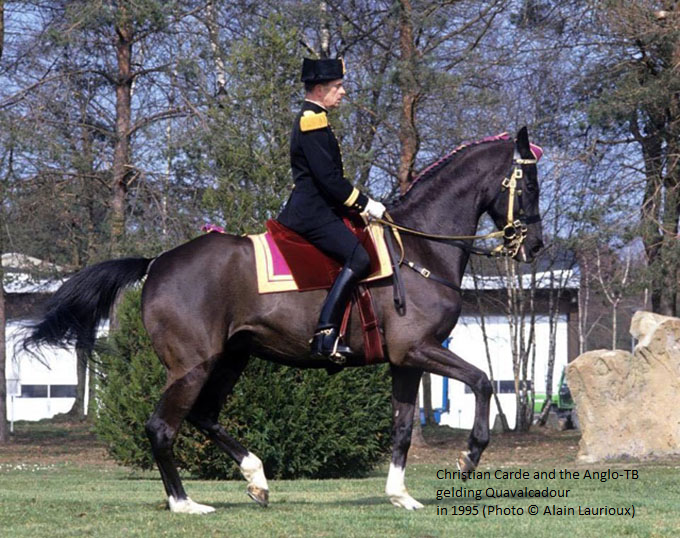
Nuno Oliveira often said that "The hands receive the work of the legs" and this succinct phrase sums up the very complicated and delicate connection between the rider’s hands and their legs. During my time at Oliveira's, I became very aware of the effects of the leg aids and how subtle they needed to be, not to mention the timing of the aids. Get it wrong and nothing happens, or you get an explosive reaction! Using your legs with the necessary tact takes time. It is not just the pressure from the legs that is important, but the timing of the aid, which varies for each horse. For the horse to be light in the hand, the rider must give light leg aids. I sometimes work a horse in-hand with the rider, and I can feel instantly how the rider is using their legs from the feeling the horse gives my hands through the bit. Heavy leg aids create heavy horses, and this can be easily seen. Often, if a horse is unresponsive to the rider's leg, the instinct is to use a stronger aid and repeat it until the horse moves. Whilst this can produce the desired result, when the leg is used in a strong manner, the horse often, braces their ribs against the leg and becomes more blocked and slows, or rushes off and hollows. Having observed the responses of many horses to the leg aids, I encourage all riders to keep the leg aids as light as possible. If your horse is not responding, check that you are not blocking with your seat, back or hands, that your legs are softly against the horse and not gripping, as all these blocks will prevent your horse from moving. If necessary, use a light touch with the whip to support the leg aid and ensure that you allow your horse to go forward: they will be confused if you are asking them to go forward but blocking them with your seat or hands. If your horse has not responded, then a stronger leg aid may be needed but it should not become the normal aid - always return to a light aid afterwards. Your position affects the aids, if you have an unbalanced seat, it is easy to allow your legs to become tight and grip harder to compensate for an unbalanced seat. Equally a rider with a balanced seat can give aids that are imprecise or poorly timed. It is important to be attentive to the pressure from your legs and the feeling of the horse’s ribs beneath them. Feeling the responses your horse gives to the aid will help you to learn the correct moment and pressure to use usually lighter that you think and then riding becomes invisible and harmonious. ©Training Riders, Transforming Horses
One of the most important things I learnt from Nuno Oliveira is that you cannot train each horse exactly the same way. Although there were many Lusitano horses at Mr Oliveira’s stables, we also trained other breeds, Selle Francais, Arabian, Russian Budyonny and Thoroughbred among others, and Mr Oliveira adapted his methods to suit each horse’s physical and mental needs throughout their training. By closely observing the horse that I am working with I can see how and why they move in a particular way. Some things to look for are;
Choosing an appropriate exercise encourages the horse to release restrictions they may have by developing suppleness, strength and balance. Sometimes it is necessary to be a little creative and adapt an exercise or develop a new pattern of work that is more effective for the horse and if the exercise is not working as you expected, again analyse where the problem is and make the necessary changes or use a new exercise. If the rider is not sitting well it has a huge impact on the way the horse moves. Working on the rider’s position, balance and aids is central to creating a horse that is well balanced and supple. If the rider is off balance their horse will be constantly adjusting his balance to compensate, and the rider’s aids will be unclear which leads to difficulty in communication. Watch the horse continually and make small adjustments as necessary. Don’t expect too much, be satisfied with small improvements and give plenty of rests, tired horses become sour, and always reward their efforts. ©Training Riders, Transforming Horses
Watching competitive dressage at the highest level it’s easy to think that dressage is only for very big moving, talented warm blood horses, but dressage is simply schooling a horse. All horses do some training at some time and whilst dressage may not be their specialty, all can benefit from a basic level of schooling and training to reduce injury and create a responsive, more comfortable horse to ride. It’s easy to dismiss a horse’s ability because he’s a 10 yo who has only hacked out, or has less than ideal conformation, or exhibits behavioural issues, but with a considered training programme issues like this can be overcome. The experience of working with many horses has shown me that with correct training horses can often achieve more than we think. (Have a look at the case studies to see more) By working towards building suppleness and strength through correct development of lateral exercises, all horses can attain the basic lateral movements; shoulder-in, travers, half pass and renvers, in walk and trot. Training must consider the horse’s conformation, along with the work they have previously done, their temperament and natural movement. When the horse is ready, introduce the exercises that build up to more advanced movements, starting with very simplified versions and developing the exercise as far as the horse allows. By identifying the qualities required in a movement, it becomes easier to see that each horse gives a movement its own expression. For example, some horses have a steeper angle in lateral movements because they are naturally more supple than others. By looking to see that the horse has a consistent bend through their body, they do not lean to their shoulders and maintain an even rhythm, every horse can produce a good lateral movement, from a Shire X to a Lusitano to a 23 year old cob. ©Training Riders, Transforming Horses 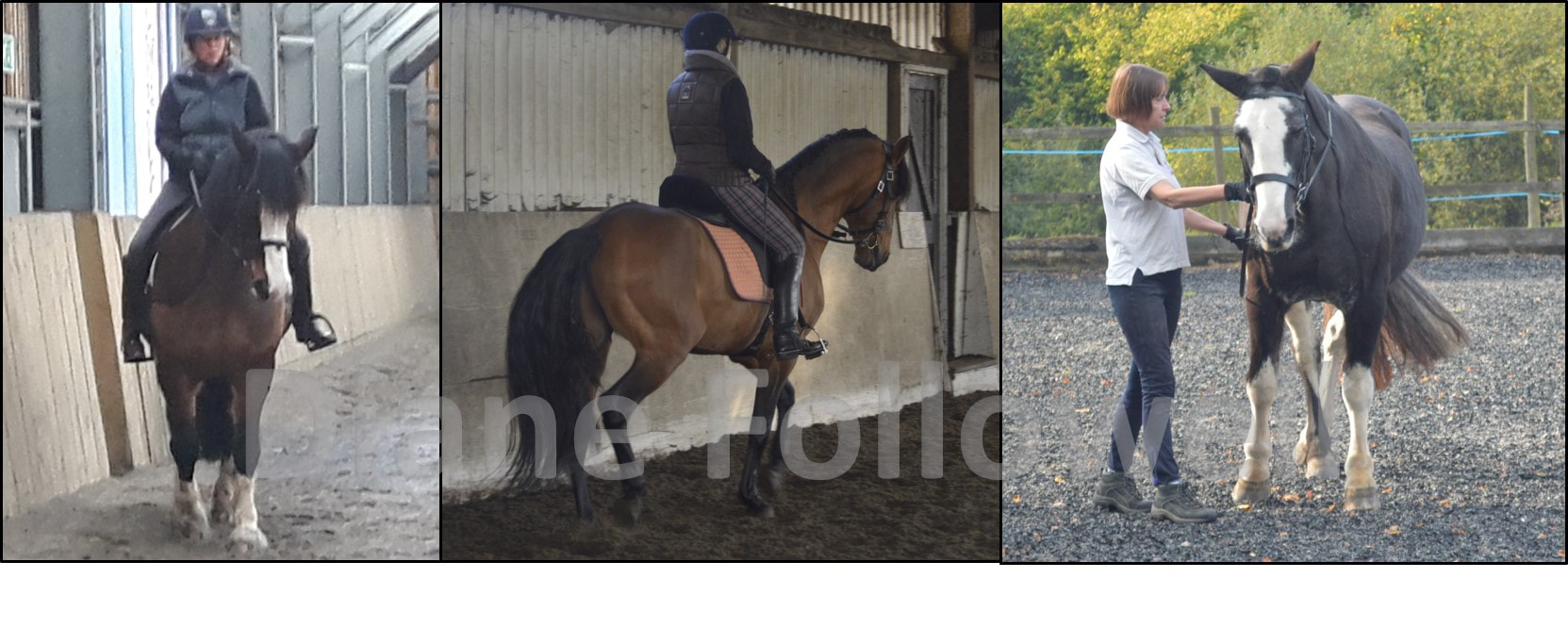 And all the others! Diane Followell - Training Riders, Transforming Horses 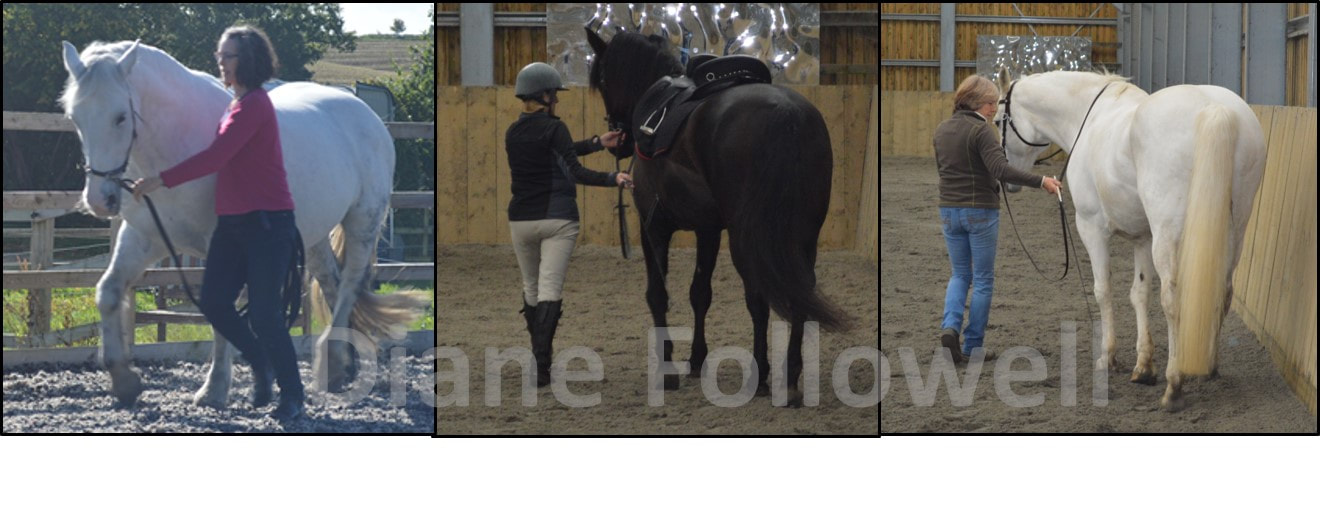 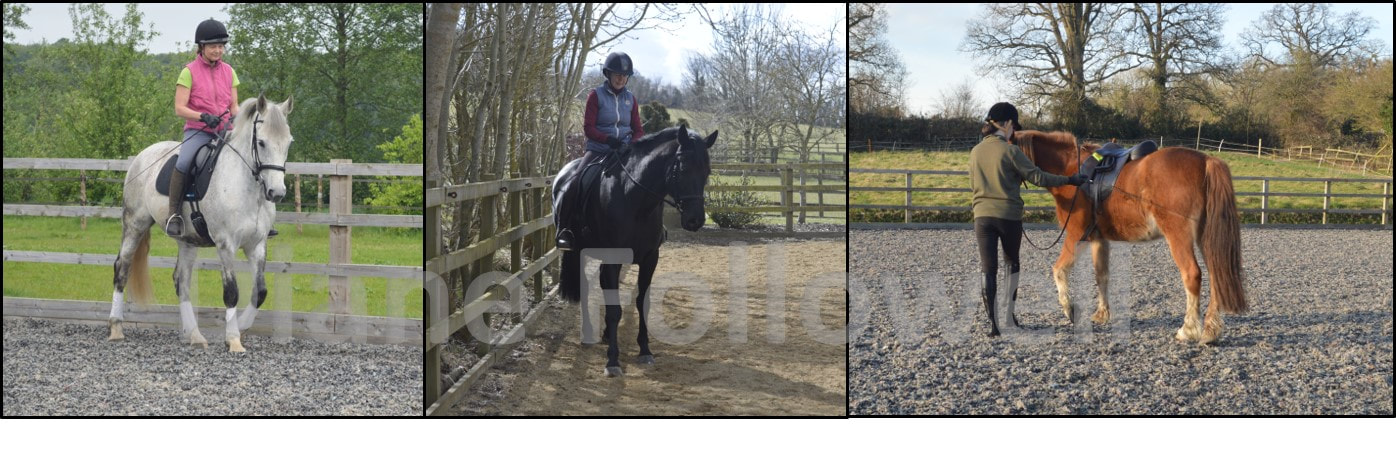 To round off 2018, I held an evening get together for my clients as an opportunity to meet each other and talk about horses in the warm instead of the cold outside! As part of the evening, I gave 3 short talks on different aspects of dressage training and touched on the idea of having realistic goals for our training going into the new year.
Whether you are a resolution maker or not, in January our thoughts tend to turn towards the things we would like to do in the coming months, so this month’s blog is about setting goals. Goals give us a direction for training, especially if we are working a lot on our own, but often it is our expectations that can be the limiting factor, either by expecting too much or too little. I don’t want to limit your ambitions, but expecting your 5-year-old to be doing piaffe in a year is probably overly ambitious, as is thinking that your 12-year-old hunter can come into the school and piaffe in a month. A long-term goal gives you a direction to develop the qualities your horse needs to be able to reach that level, and often - even if you don’t achieve your original goal - correctly working your horse through the development exercises can produce something different that is equally good. Understanding the qualities that you need to develop for your horse allows you to have a plan that can be broken down into manageable steps, so that you have short term stages that will build to the larger goal e.g. shoulder-in will be difficult until your horse has good balance on a circle. So, if your goal is to ride shoulder-in, the work must go into preparing it through correct circles. Remember that training is never a straight line; as you advance your training your horse will ask questions of you, and the good news is that if you have done the ground work correctly you will find the answer in an exercise you have already done. A few points to keep in mind:
©Training Riders, Transforming Horses |
AuthorDiane Followell Classical Dressage Trainer 
|


 RSS Feed

Telephone+44 (0)7931551014
|
|
© Diane Followell 2015 -2024.
All Rights Reserved.
All images and content are copyright Diane Followell unless otherwise stated.
All Rights Reserved.
All images and content are copyright Diane Followell unless otherwise stated.